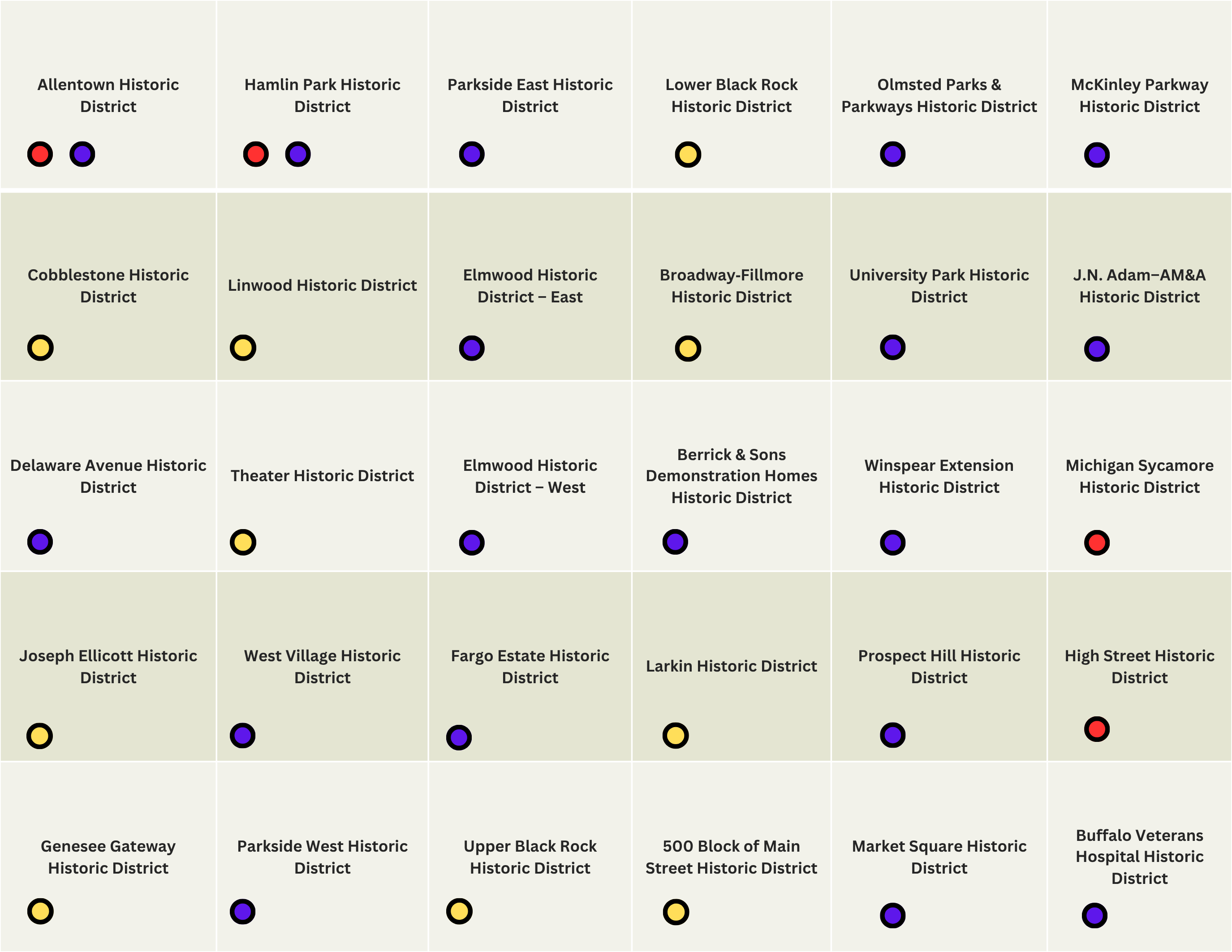
Buffalo’s rich architectural heritage is one of the defining features of our city, and Historic Districts play a vital role in preserving the buildings and neighborhoods that tell our story. Throughout Buffalo, 30 designated Historic Districts help protect significant places while recognizing their cultural, architectural, and historical importance. Not all Historic Districts are the same, however. Buffalo is home to three different types of Historic Districts, each with its own level of protection, review process, and potential benefits for property owners. Understanding the differences can help homeowners, businesses, and developers navigate preservation requirements and take advantage of available incentives.
Types of Historic Districts
Local Historic Districts
Local Historic Districts are designated by a municipality, such as a city, town, or village. Properties within these districts are subject to review by the local Historic Preservation Commission when exterior changes are proposed. This review process helps protect the historic character of the district by ensuring that alterations, new construction, and demolitions are compatible with the surrounding historic environment. Local Historic District designation does not provide eligibility for historic tax credits.
Visit: Preservation Board | Buffalo, NY for more information about Buffalo’s Historic Preservation Commission.
Certified Local Historic Districts
Certified Local Historic Districts are locally designated historic districts located within a Certified Local Government (CLG) community. A Certified Local Government works in partnership with the New York State Historic Preservation Office (SHPO) and the National Park Service to identify and protect historic resources. In Buffalo, contributing buildings within Certified Local Historic Districts may be eligible for state and federal Historic Tax Credits. Properties in these districts are also subject to review by the local Historic Preservation Commission for exterior alterations.
Visit: Historic Tax Credits – Preservation Buffalo Niagara to learn more about Historic Tax Credits.
National Register Historic Districts
National Register Historic Districts are recognized for their historical, architectural, or cultural significance at the state or national level and are listed in the National Register of Historic Places. Historic Districts that are on the National Register of Historic Places are known as Listed. Contributing properties within these districts may be eligible for state and federal Historic Tax Credits for qualified rehabilitation projects. National Register designation alone does not require review by a local Historic Preservation Commission. It does not restrict a property owner’s ability to alter or demolish a building unless other local protections are in place. Property owners are not required to participate in the Historic Tax Credit program.
Visit: Historic Tax Credits – Preservation Buffalo Niagara to learn more about Historic Tax Credits.
Multiple Designations
A historic district may be recognized under more than one designation program. For example, a property may be located within both a Local Historic District and a National Register Historic District, providing both local protection and potential tax credit eligibility.
Not sure what type of historic district your property is located in? Contact Emily Jarnot at emily@pbnsaves.org and include your property address. We’ll help you determine what historic designations apply to your property.